
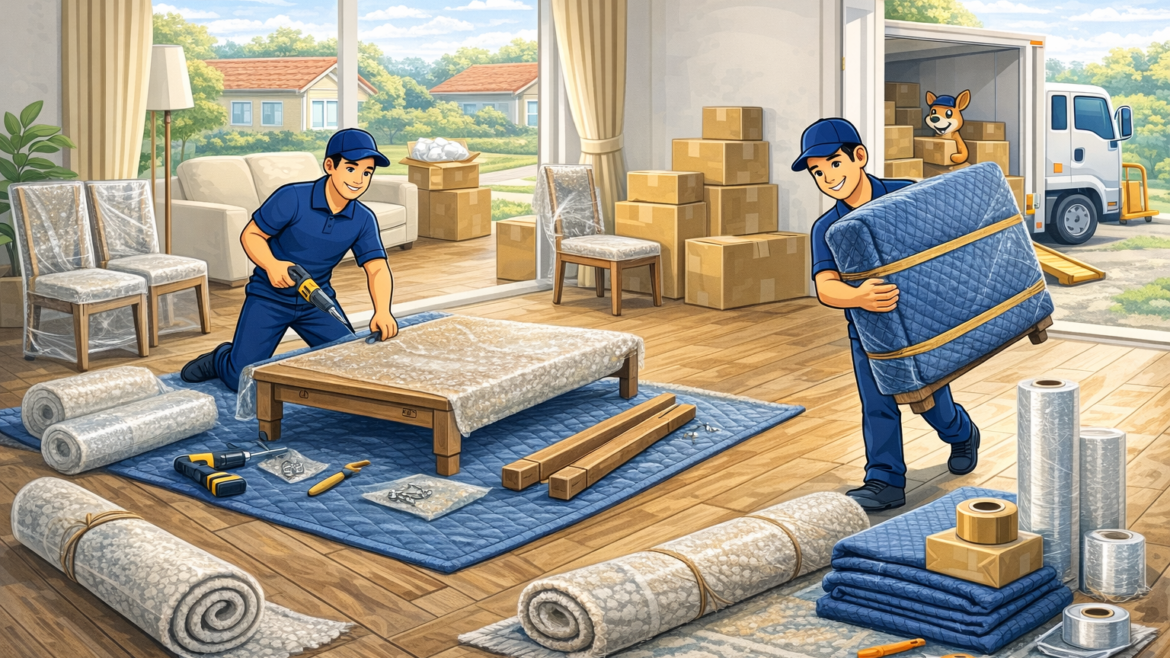
Moving furniture can be one of the most challenging parts of any relocation. Large, heavy, and often expensive items require careful handling to avoid damage to both the furniture and your property. With the right preparation and techniques, furniture can be moved safely and efficiently.
Start by assessing which pieces need to be disassembled. Beds, dining tables, desks, and large wardrobes are much easier to transport when taken apart. Remove legs, shelves, and detachable parts, and keep all screws and fittings in labelled plastic bags. Taping these bags securely to the furniture frame helps prevent loss during the move.
Protection is key when moving furniture. Use high-quality moving blankets, bubble wrap, and plastic wrap to shield surfaces from scratches, dents, and dirt. Pay special attention to corners, edges, and glass components, as these areas are most prone to damage. Upholstered furniture should be fully wrapped to protect it from dust and moisture.
Before moving items out, clear pathways and doorways to avoid accidents. Measure furniture and entry points in advance to ensure items fit through doors, hallways, and staircases. Lifting furniture correctly is equally important—always lift with your legs, not your back, and use trolleys or sliders for heavy pieces whenever possible.
When loading furniture into the moving truck, place heavier items first and secure them against the walls using straps. Avoid stacking heavy objects on top of delicate furniture. Mattresses and sofas should be kept upright to save space and maintain their shape.
Once you arrive at your new home, carefully unwrap furniture and allow items to acclimatise before reassembling. This is especially important for wooden furniture, which can be sensitive to temperature and humidity changes.
By disassembling, protecting, and loading furniture correctly, you can significantly reduce the risk of damage and ensure your furniture arrives safely and ready to use.